
 We are now about two weeks into the national lockdown. The cyclist population has gone way up, and the vehicle numbers have gone way down. Tractors are the main traffic, and at the moment they usually have giant Cambridge rollers on the back, and make a serious noise as they pass. There are occasional delivery vans, and the postman; but of the few vans or cars we see, most are local. If you shut your eyes and listen to the birds, there are huge swathes of time on the road when, if it weren't for the distant tractors crushing and flattening the soil in preparation for sowing, you could be in the village in the 19th century, before the advent of the motorised charabanc and the automobile. There is birdsong punctuating a profound quiet.
Alongside the roads, you can see in action how "litter" was a creation of the 20th century (see "An Introduction to Litter"). As through-traveller and tourist-filled cars came flooding into the countryside through the course of the 1900s, so did their waste. As the traffic has receded in the pandemic, so has the waste. Litter is a diagnostic marker of people, traffic, and strangers. Less traffic, fewer people, less litter.
It is not gone entirely.
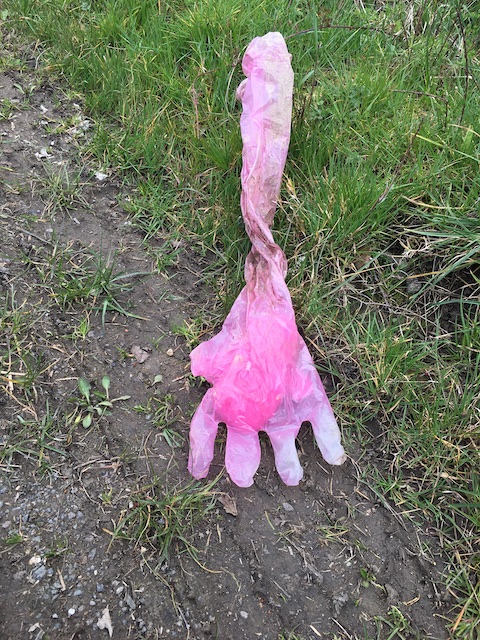
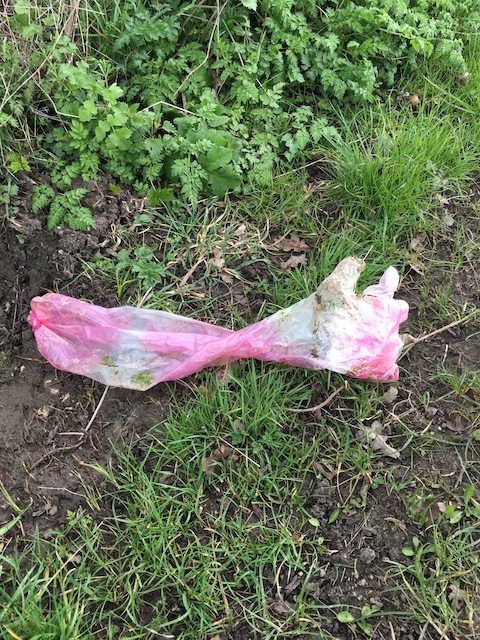
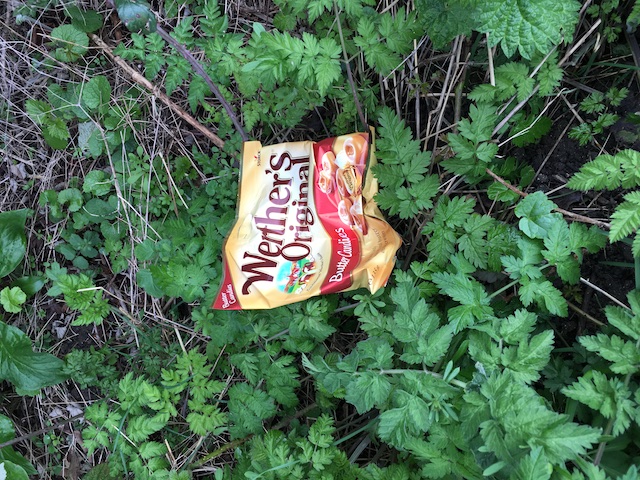
A walk last week turned up the series you're about to see, all, - bar one Werther's wrapper - on the Western verge of the South Road; a stream of debris on what would be the driver's side of a car heading away from the village, or the passenger's heading in: windows rolled down at the moment, because we're in the midst of a mini heat-wave, with temperatures sometimes hitting the 50s (low 10s, Centigrade). The pictures will be in sequence, beginning with the kind of thing I guess you will only see near a cattle farm, or some equivalent, where a vet thrusts their arm deep into a beast from behind. Or perhaps the farmer him or herself, dispensing with the vet.
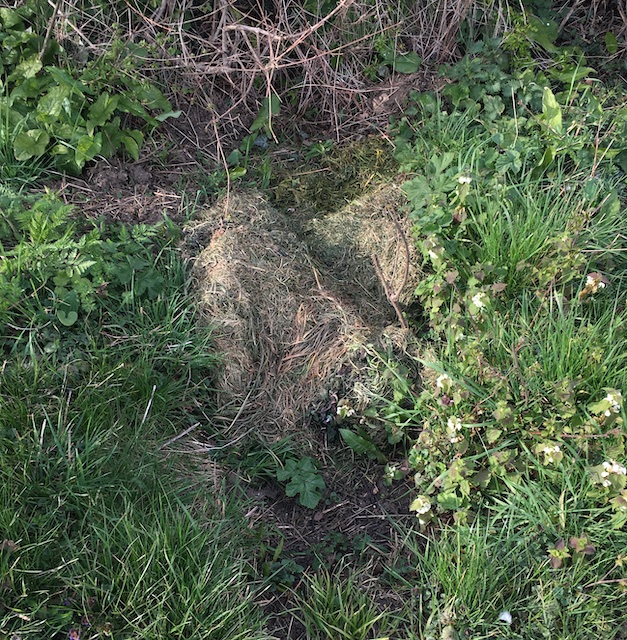 But first, today, we came across this curious pile of I'm not sure it's litter. We're almost as far out of the village on the West road as you can get, with no house or lawn for kilometers, and no obvious rationale for dumping. It's simply a lump of freshly cut long grass, dumped into the channel recently dug by Council workmen to let water run off the road. It's blocking the channel, but it's organic, and litter-wise pretty inoffensive. As a category it doesn't fit into blue bag recycling (they only really want metal, plastic, paper and glass); but it doesn't really shout out "Landfill!" either. Left to its own devices and assuming it hasn't been soaked in some exotic and non-existent permanent preservative, it will rot, and ultimately become soil. So in that sense it's not litter; but it also doesn't belong there. It's a kind of strange fly-tipping. And it's just odd. Has someone with a two foot square plot of once-overgrown-but-now-nicely-trimmed lawn in urban Birmingham driven two-hours round-trip just to drop their grass cuttings in our open countryside? Has some over-devoted animal lover brought a ginormous pile of grass to feed over the fence to local horses, but being rumbled by the irate horse-owner, been chased and chastened into panic-dumping their hoard on the way out of town? Or has someone in a ride-on mower become lost, and overboarded their load like a ship in a storm as their petrol ran out, trying to eke out the last two miles (or is it four?) to the nearest garage? "To each his own, it's all unknown" - is this true? - "if dogs run free."
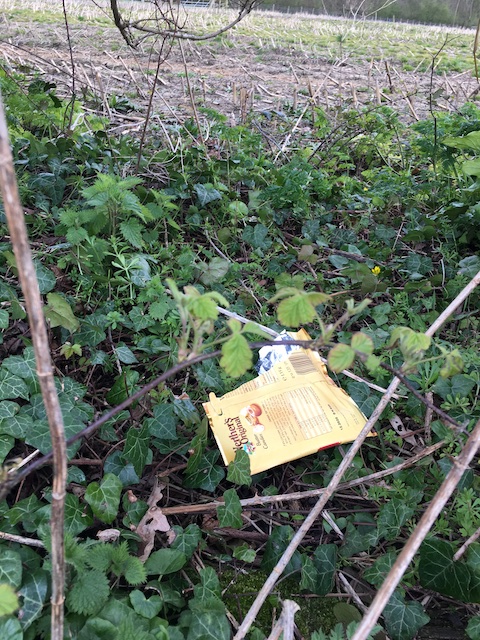
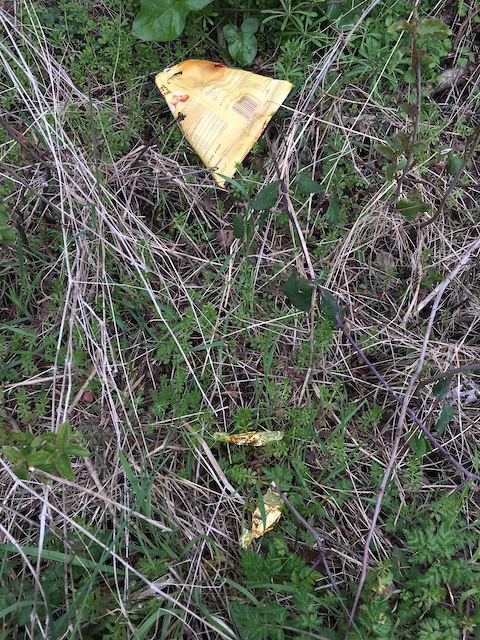
A baffling series: Who on earth could eat that many Werther's Originals in the space of a mile, and might that somehow explain the abandoned and charmingly coloured arm-gloves? (And yes, those really are three separate, individual Werthers bags.)
The following photographs are in the sequence of encounter, spread over the left hand side of the road (heading back towards the village), with a good twenty yards between glove 1 and glove 2. I honestly didn't check to see which was the right-handed and which was the left, which Forensics might have been able to use to work out a sequence of events, and I didn't open up the palms to see what was tucked up there:
The outlier: On the opposite side of the road.
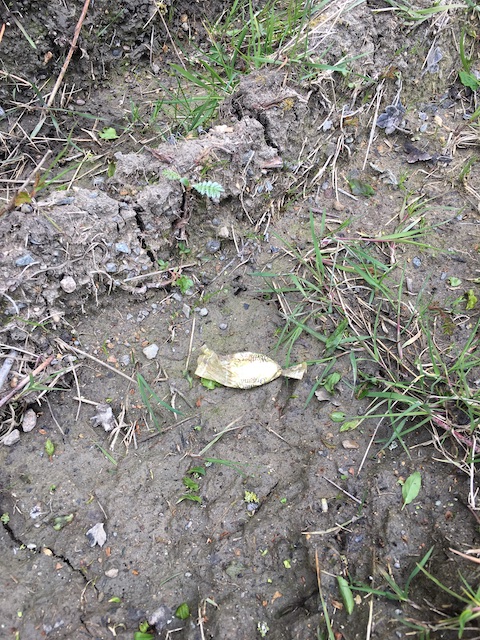
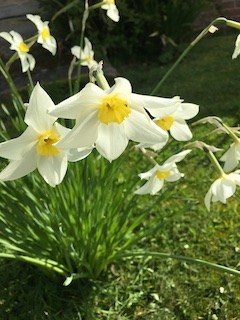
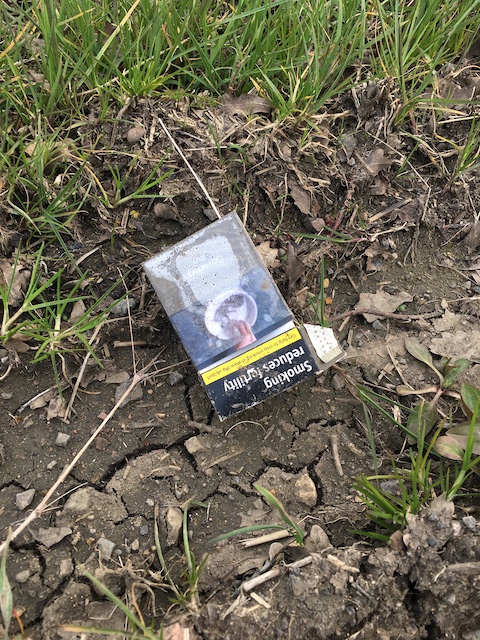
This one is totally unrelated - a different road and day altogether. But given that it represents someone trying to kill themself, but committed to denial and rejection, and throwing it out of their presence into the midst of farmland at the onset of Spring, the paradox of death in a time of renewal is almost overwhelming. Nowruz has just been, and Easter is almost here. The daffodils are blooming.
The line of the pandemic is rising.