https://mulberry-bush.epexio.com/records/WILLS
| CORRECTIONS/EMENDATIONS | |||
| Reference number |
WILLS |
||
| Date(s) |
1928-1979 |
. | |
| Extent and medium | 46 boxes approx. | ||
| Category | Personal Papers | ||
| Scope and content |
Papers of David Wills including correspondence, articles and lectures, |
||
| History |
David Wills was a pioneer of residential therapeutic child care. Born in 1903, he was a Quaker and active member of the Society of Friends. In his early career, Wills worked in a number of hostels for 'maladjusted' boys, and in the Settlement Houses sponsored by Welsh Quakers. In 1935 he wrote an article for 'The Friend', Quaker publication in which he called for a bold experiment in the treatment of young offenders. He believed that creating a community setting in which young people would be encouraged to take collective responsibility for the maintenance and improvement of their environment. Wills believed this would produce far better results than traditional custodial methods. The article caught the attention of Dr Marjorie Franklin secretary for a newly formed group, the Q Camps Committee, supported by supported by British Friends’ Penal Reform Committee. Franklin invited Wills to join the group, and in May 1936 the first Q Camp - Hawkspur Camp, opened on Hill Hall Common in Essex with David Wills as Camp Chief. Following a successful tenure at Hawkspur, Wills was invited by the Friends to take up the appointment of Warden at the newly created Barns School and Hostel, Peebles, Scotland in 1940 which looked to provide residential care for boys considered too disruptive for inclusion in the government evacuation scheme. When Barns closed at the end of the war, Wills relocated to Bodenham Manor School for ‘maladjusted children’ in Herefordshire where he remained until 1961. In the early 1960s, Wills supported a group of Quakers to establish Glebe House,a residential children's home, becoming a founding trustee. Wills was also one of the first Trustees of the Planned Environment Therapy Trust, founded in 1966 by Dr. Marjorie Franklin for the promotion of therapeutic practices. Wills was the author of many influential books examining therapeutic communities: The Hawkspur Experiment (1940), The Barns Experiment (1945), Throw Away Thy Rod (1960), and Spare the Child (1971). Wills was awarded an OBE for his services to education in 1974. Wills passed away in 1981. |
||
| Name of creator(s) |
Wills, David |
||
| Language |
ENG |
||
| Title |
David Wills Archive |
||
| Date(s) description was created | February 2020 |
Comments
<2026-08-09>
In this article I am going to depart from my practice up to this point (August 9, 2026), in which I have fully completed analyses of catalogue descriptions before posting them. In part this is a rebellion against a backlog of analyses, which I feel I should clear before adding a new one. That I am starting a new one, to which I will add in free moments, and which will therefore change and grow, comes on the heels of tackling (but not yet publishing) the Appendix on the Homer Lane Trust Archive after tackling and publishing the Appendix on the It-Isn't-There-Why Homer Lane Trust Ltd Archive, and some of the things that have been thrown up in the course of that. Two things in particular have sparked this approach, which are embedded in the David Wills Archive catalogue description above, and indeed bump into one another as the last two sentences of its History: "Wills was awarded an OBE for his services to education in 1974. Wills passed away in 1981."
"Wills was awarded an OBE for his services to education in 1974."
Wills was neither a teacher nor a headteacher, nor honoured by the State for his services to education. According to the London Gazette (Supplement to The London Gazette of Friday, 28th December 1973. No. 46162. Tuesday, 1st January 1974 , p. 12) his OBE was awarded "For services to handicapped children". "Maladjusted children" were officially categorised as among the handicapped at the time. Wills himself was a residential worker with a pre-War training in the United States as a psychiatric social worker. He is said to have been the first trained British male psychiatric social worker.
"Wills passed away in 1981."
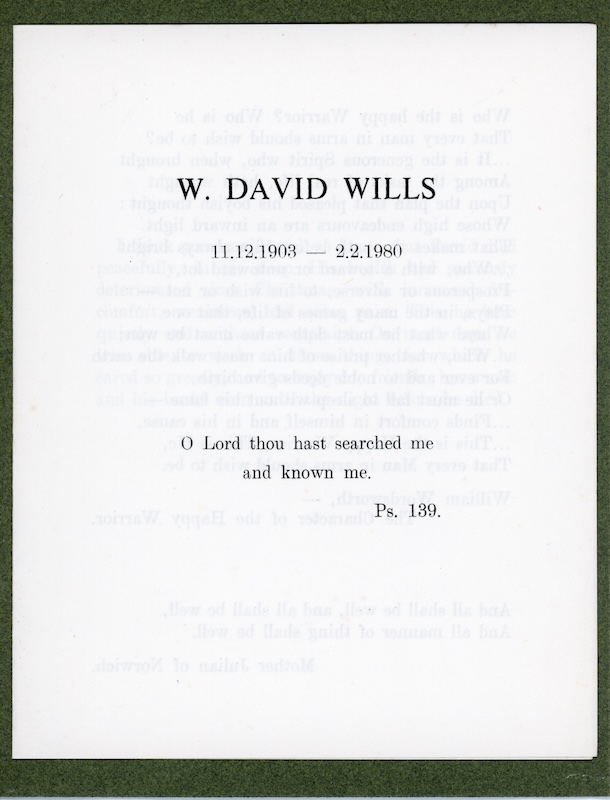
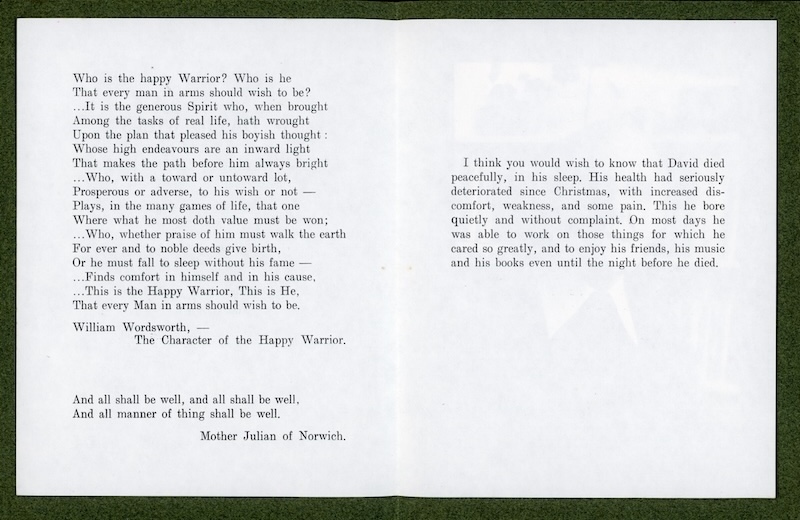
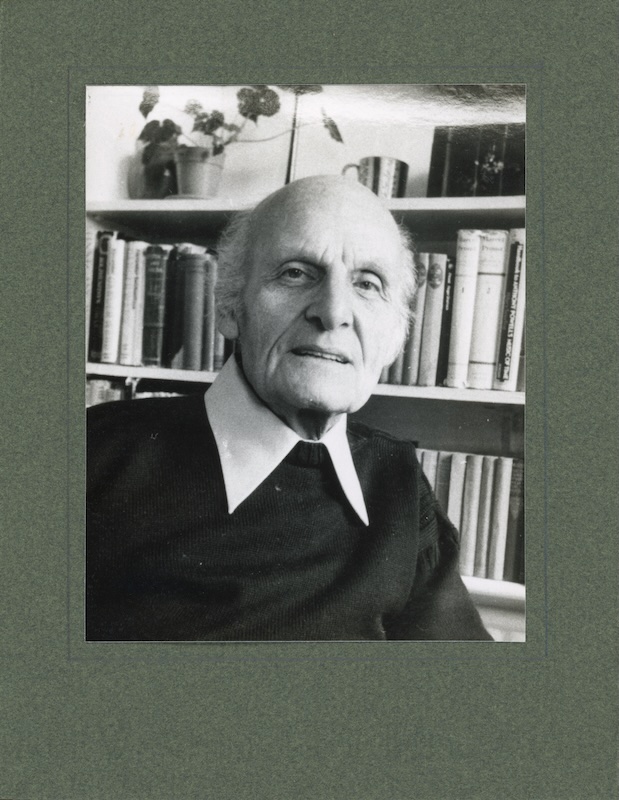
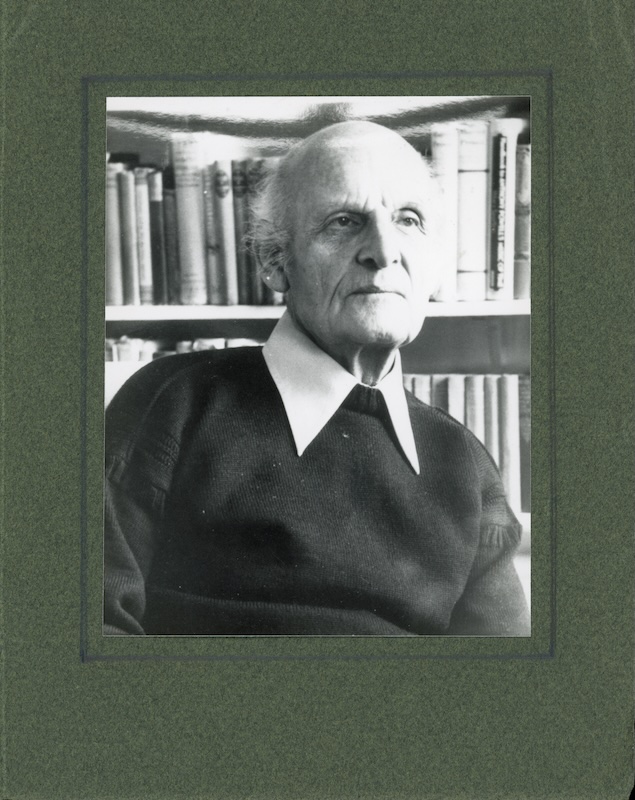
Thanks to the Winnowing described in the blog that accompanies this "book" (see here), I can offer visual and documentary confirmation that he died on February 2, 1980, the year before 1981. This is how his widow Elizabeth shared news of his death:
 |
 |
Alarm Bells [there will be no alarm bells until we are farther along in the analysis. What is below are merely indicative categories of what might be]
Where - in what sources - could we expect to find relevant information for this catalogue description?.
1. ACCESSION REGISTER
2. CATALOGUES
3. ARCHIVIST'S REPORTS
4. ARCHIVIST'S CORRESPONDENCE
5. THE FILES THEMSELVES IN A DEDICATED FOLDER ON THE DIGITAL STORE
6. THE WEBSITE
7. PETT NEWSLETTERS
8. ASKING A PERSON WHO WOULD KNOW